AI in Environmental Consulting: Why Human Judgement Still Matters
AI is making technical report preparation faster, but it is also raising expectations. Environmental Health Scientist Taisa Baars explains where AI can help—and why site investigation, scientific risk assessment, collaboration, professional judgement and genuine care cannot be automated.
Author
Taisa Baars, Environmental Health Scientist
Environmental Consulting; Environmental Health; Small Business
Artificial intelligence is changing the way reports are written across planning, engineering and environmental consulting. It can help organise information, improve wording, check consistency and turn technical notes into a clearer first draft.
In many ways, this is a positive change. But it also raises an important question: if producing a polished document is becoming easier, what should clients and councils expect from the consultant behind it?
Faster writing does not mean instant professional advice
AI has certainly made parts of report preparation faster. It can assist with repetitive wording, document structure, tables, summaries and administration. For a small consultancy, this creates more time for the work that matters most: inspecting the site, reviewing the evidence, speaking with the project team and developing a practical solution.
I am trained as an Environmental Health Scientist. My professional role is not simply to produce a report—it is to identify and assess risks to human health and the environment, understand how people interact with a site, and recommend controls that are proportionate, practical and supported by evidence.
That scientific risk-assessment process is the most important part of the work, and it is where my time and attention should be focused.
However, the time required to type a report was never the same as the time required to reach a sound professional conclusion.
A reliable environmental assessment may involve:
understanding the site, its history and surrounding land uses;
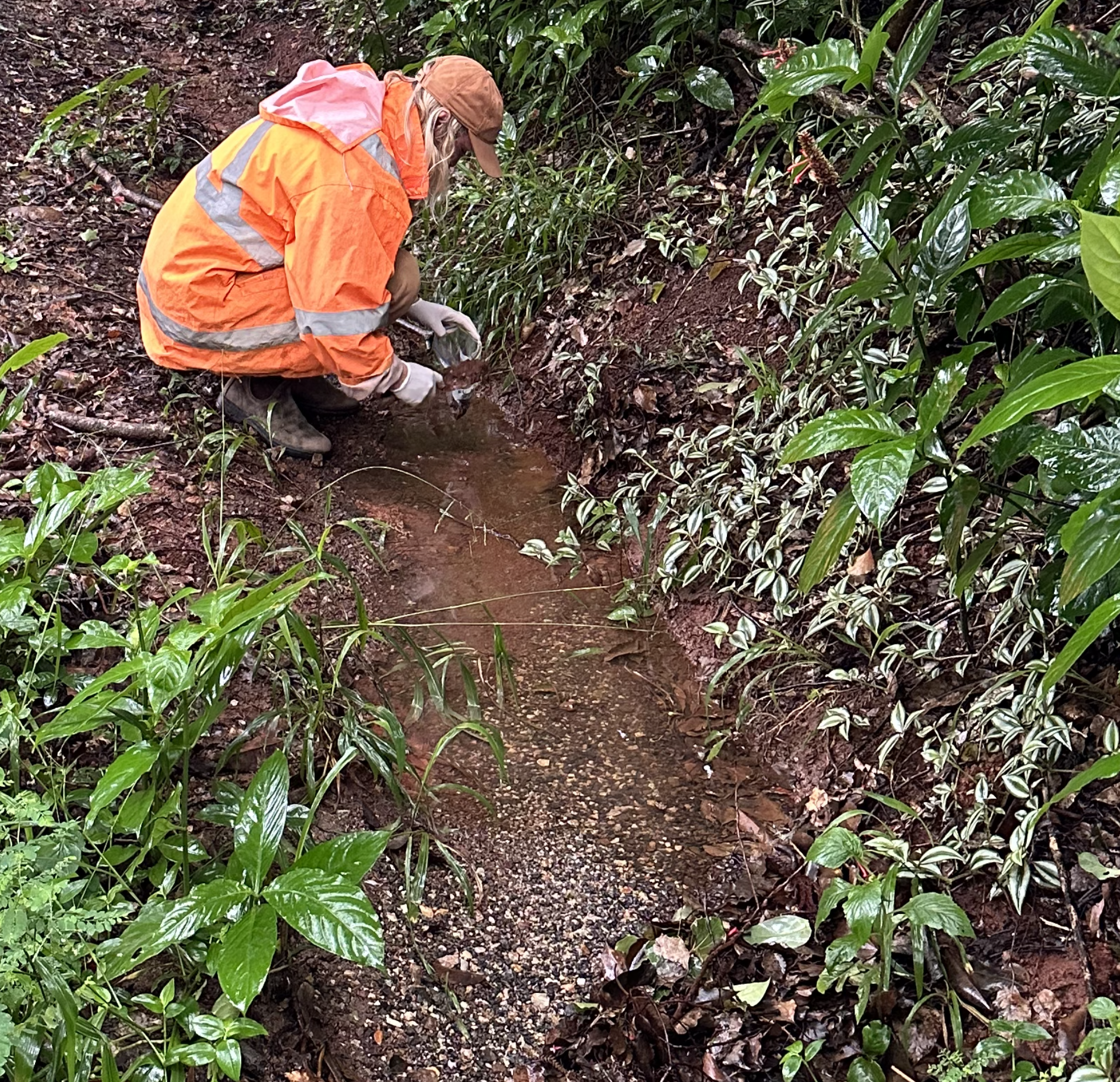
undertaking field observations, measurements, soil testing or sampling;
identifying potential exposure pathways and who or what may be affected;
assessing the likelihood and consequence of environmental and public-health risks;
checking legislation, standards and council requirements;
identifying uncertainty and environmental or public-health risks;
developing controls that reduce risk without creating unnecessary cost or complexity;
considering whether the proposed solution can actually be constructed and maintained; and
taking professional responsibility for the final recommendation.
AI can assist with communicating this work. It cannot replace the work itself.
A polished report is not necessarily a good report
One of the risks of AI is that it can produce confident, professional-sounding text even when the underlying information is incomplete or incorrect. A report may look impressive while relying on generic statements, an unsuitable design assumption or a requirement that does not apply to that council or site.
For clients, planners and council officers, the most important question is no longer simply, “Does this report look professional?” It is:
Can I see how the consultant reached this conclusion?
A strong report should clearly connect:
the evidence collected;
the site constraints;
the applicable requirements;
the consultant’s reasoning; and
the recommended design or management measures.
It should also acknowledge limitations and uncertainty rather than hiding them behind polished language.
Professional care cannot be automated
There is another difference that matters: AI does not care about the outcome.
It does not care whether a homeowner understands the recommendation, whether a family is protected from an environmental health risk, whether a wastewater system continues to work during prolonged wet weather, whether a plumber can construct the design, or whether the solution improves or unnecessarily damages the surrounding environment.
I do.
That care is not separate from professional practice. It is one of the reasons to inspect carefully, ask further questions, identify uncertainty, return a phone call, work through an installation problem and avoid recommending something simply because it is the easiest standard response.
Professional care does not mean promising that every project will be simple or that every preferred outcome can be supported. It means being honest about the risks, looking for a practical way forward and taking responsibility for the quality of the advice.
How to recognise genuine, site-specific professional work
Whether a report has been prepared with AI assistance is less important than whether it is accurate, transparent and professionally reviewed. Useful questions include:
Does the report contain real site observations, measurements, photographs or test results?
Are the calculations consistent with the plans and recommendations?
Is it clear why the proposed solution was selected?
Have realistic alternatives and site constraints been considered?
Are the legislation, guidelines and standards current and relevant?
Could the report apply to almost any property, or is it clearly written for this site?
Can the consultant explain and defend the recommendation if questioned?
These are the features that distinguish professional assessment from automatically generated content.
What clients should expect
Clients are entitled to expect reports that are clear, well organised and reasonably efficient. AI can help consultants meet that standard.
But clients should not expect reliable technical advice to become instant or nearly free simply because software can generate words quickly. The value of consulting lies in investigation, judgement, experience, problem-solving and accountability—not in the number of pages produced.
Sometimes the most professional advice is not the longest report. It may be a concise explanation of the real constraint, a design change that avoids an unnecessary risk, or an early conversation that prevents delays during assessment or construction.
What councils should expect
Council officers are likely to receive an increasing number of polished but generic reports. Clear evidence and transparent reasoning will therefore become even more important.
A consultant’s report should make the assessment easier, not transfer unresolved technical questions to Council. It should identify the relevant risks, explain how they have been assessed and provide recommendations that can be understood, conditioned and implemented.
Used responsibly, AI can improve consistency and readability. It should never be used to disguise missing fieldwork, unsupported assumptions or a lack of professional understanding.
What AI means for small consultancies
For an independent consultancy such as Byron Environmental Consulting, AI is not a substitute for professional expertise. It is a supporting tool—and, used well, it can give some valuable time back.
There is also a personal benefit for me. I was born in the Netherlands, Dutch is my first language and I learned English later in life. My scientific knowledge, site observations and professional conclusions are my own, but AI can help me refine the English expression so that complex advice is communicated clearly and professionally.
I do not see that as replacing my voice. Used carefully, it helps me express my own thinking more clearly. Every technical statement, conclusion and recommendation must still be reviewed by me and supported by the evidence.
Self-employment involves much more than completing the technical work clients see. A consultant also manages enquiries, proposals, scheduling, invoices, records, document formatting, follow-up correspondence and the many small administrative tasks required to keep a responsible business operating.
Those tasks matter, but they can take time away from the reasons many of us entered environmental work in the first place: being on site, understanding a problem properly, developing a sound solution, helping a client navigate a difficult process and improving environmental and public-health outcomes.
Much of the real work also happens through conversation and collaboration. A practical environmental solution is rarely developed by a consultant working alone at a desk. It may require meeting with homeowners to understand how they use the property, discussing construction constraints with plumbers and installers, reviewing options with architects, designers and town planners, and working with developers and Council officers to find a solution that is compliant, achievable and appropriate for the site.
These discussions often reveal information that is not shown on a plan. A homeowner may explain how the land behaves after prolonged rain. A plumber may identify a practical installation constraint. A designer may be able to adjust a layout before it becomes an expensive problem. An Environmental Health Scientist brings these perspectives together, identifies potential hazards and exposure pathways, evaluates the actual level of risk and turns that assessment into a workable recommendation.
AI can reduce some of this administrative load. It can help organise notes, prepare routine correspondence, improve document consistency and make technical findings easier to understand. That does not reduce the value of the consultant. It allows me to spend more time applying my environmental health training to the risk assessment itself—and more time meeting with the people who will design, approve, build, maintain and live with the final solution.
This is particularly valuable for a small business. Larger organisations may have separate staff for administration, editing, marketing, project coordination and accounts. In a small consultancy, these responsibilities often sit with the same person who undertakes the site inspection, completes the assessment, speaks with Council and stands behind the final advice.
The strength of a small consultancy is not that it tries to imitate a large firm. It is that the client has direct access to the person doing the work. Information is less likely to be lost between departments, decisions can be made with a clear understanding of the whole project, and advice can remain practical and personal.
Used carefully, AI helps protect those strengths. It can provide some of the administrative capacity of a larger organisation without replacing the direct relationship and professional responsibility that distinguish a good independent consultant.
For Byron Environmental Consulting, that means retaining the benefits clients value:
direct contact with the person undertaking the assessment;
local knowledge and experience with Northern Rivers councils;
continuity from the first conversation through to the final report;
practical collaboration with homeowners, developers, plumbers, installers, designers, planners and Council;
practical, site-specific recommendations;
independent advice without a preferred product or system; and
personal responsibility for the work provided.
Small businesses also have an important role in their communities. They build long-term local knowledge, develop relationships with councils and other professionals, and depend on the quality of their reputation rather than the strength of a corporate brand. Every project matters.
The future is unlikely to be a contest between AI and environmental consultants. It will be a distinction between consultants who use AI carefully to support better work, and those who allow polished language to replace investigation and judgement.
Our approach
At Byron Environmental Consulting, technology may assist with document preparation and routine administration, but every final report remains my work and professional responsibility.
My advice is based on the site, the available evidence, the applicable requirements and my training and experience as an Environmental Health Scientist. I assess the hazards, exposure pathways, people and environmental receptors that may be affected, and the likelihood and consequence of harm. I then develop practical measures to avoid or reduce that risk.
I review the reasoning, calculations and recommendations before a report is issued. Where information is uncertain, I say so. Where a practical solution is available, I explain why it is appropriate.
AI may help me work more efficiently and communicate more clearly. The time it saves can be spent on the real substance of the work: field assessment, scientific risk assessment, further study, technical review, meeting with clients and project professionals, and developing practical environmental solutions that can actually be approved, constructed and maintained.
It does not inspect the land, assess the soil, listen to a homeowner, work through an installation issue with a plumber, negotiate a practical response with the project team, speak with Council, understand the history of a property, care about the environmental and human outcome or stand behind the final recommendation.
That remains the role of the consultant—and it is where the real value of professional advice lies.